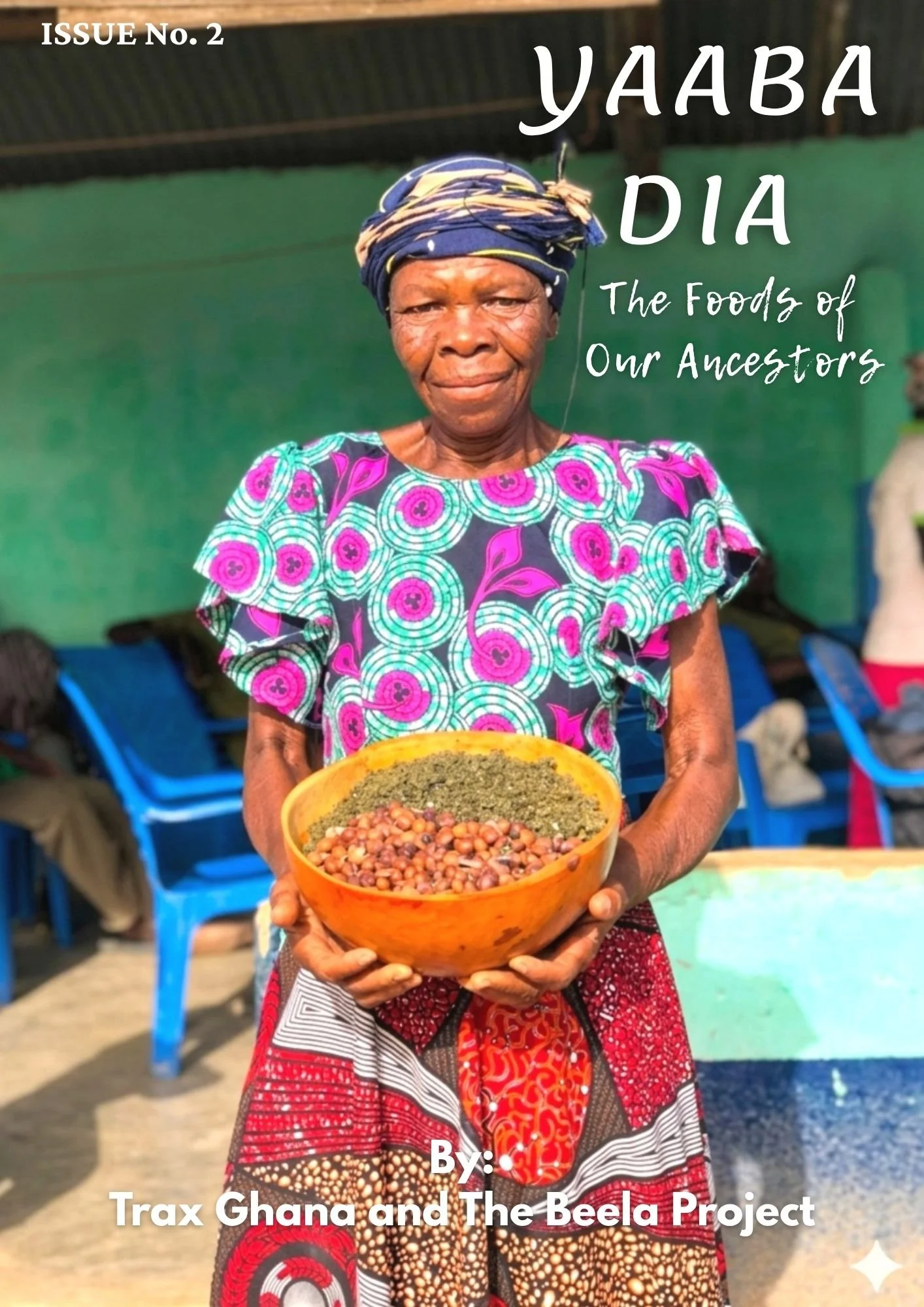
ISSUE 1:
YAABA DIA: THE FOOD OF OUR ANCESTORS
The Beela Project and Trax Ghana work with communities to facilitate indigenous cooking, engaging communities on the impact of the loss and decline of their local and indigenous seeds on their food sovereignty, indigenous knowledge, and cultural practices. The community's indigenous cooking activities revive and reconnect communities with their indigenous foods. The decline of seeds and their varieties impacts the kinds of foods households and communities decide to prepare. The gradual loss of local and indigenous seeds over time means a decline in indigenous food histories, stories, and practices.
YAABA DIA is a compilation of stories told by elderly men and women in each community, sharing the histories behind each dish. This book is a way to capture the stories held by communities about their foods and to also create another mechanism for passing on the stories and histories to future generations.
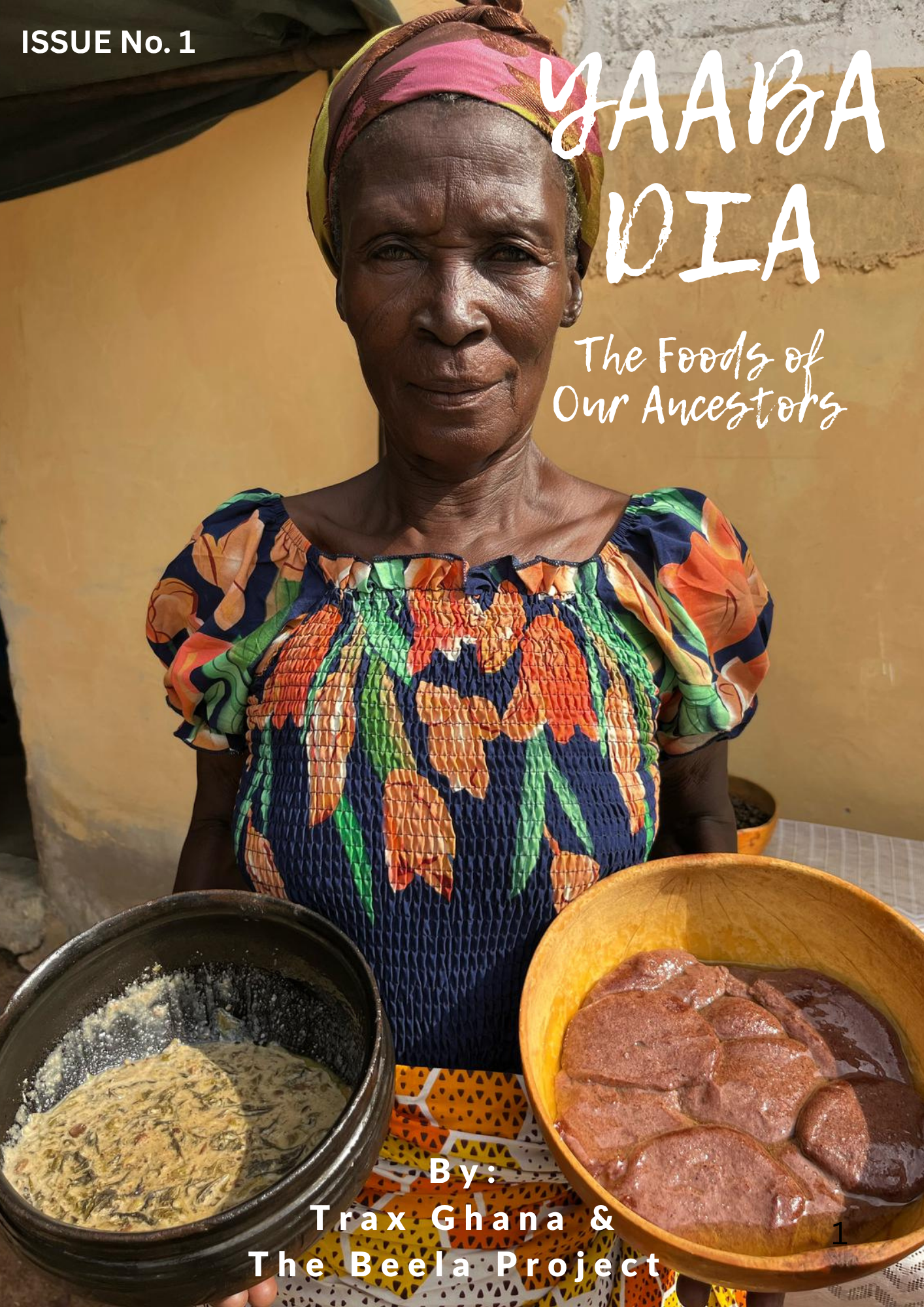
ISSUE 2:
YAABA DIA: THE FOOD OF OUR ANCESTORS
Through a participatory communal process, communities select the dishes to prepare to revive traditional knowledge, cooking techniques, and food histories. The community indigenous cooking took place in 19 project communities and 1 school. The names of the foods and their spelling differ depending on the district, the communities, and the local languages spoken. The main languages spoken in the Trax and Beela project communities are Gurune and Nabt. This issue of Yaaba Dia captures the history and stories of the foods, including a step-by-step process for each food and ingredient list. Each community has its own special way of preparing a dish, depending on the introduction or discovery of the dish in the community, and the availability of resources to prepare the dish. Indigenous food is about people’s identity, history, and culture. The cooking brought together community members sharing stories, histories, and memories about the dish prepared, creating room for intergenerational knowledge exchange with the youth. Yaaba Dia captures the histories and stories of community indigenous foods.